How to Change Violin Strings and Tune with a Free Online Violin Tuner
Feeling frustrated by old, dead, or broken violin strings? Does the thought of changing your violin strings feel a little scary? You're not alone. I remember the first time I had to do it; my hands were shaking, convinced I'd snap a string right in my face (which, full disclosure, I did once!). Many beginners and parents find this task intimidating, worrying they might damage the instrument. But don't let that fear hold you back from a beautiful, vibrant sound.
This step-by-step guide is designed to make the process simple, safe, and stress-free. We’ll walk you through everything, from knowing when it’s time for a change to correctly installing your new set. Learning this essential skill will empower you, refresh your violin's sound, and ensure stable tuning for every practice session.
Once your new strings are on, the final step is getting them in tune. This is where a good violin tuner is essential. You can get started right away with our professional online violin tuner—a free online violin tuner that works right in your browser without any downloads.

Why & When to Replace Violin Strings (Before Tuning) for Best Sound
Violin strings are not meant to last forever. Think of them like the tires on a car—they wear out over time with use. As they age, they lose their brightness, responsiveness, and ability to hold a consistent pitch. Regularly replacing your strings is one of the easiest and most effective ways to maintain your instrument's sound quality and playability.
Clear Signs Your Violin Strings Need Changing
Not sure if it’s time for a new set? Your violin will give you some clear signals. Look out for these common signs of wear:
- Visible Fraying: The metal winding around the string core starts to unravel, especially in the area over the fingerboard.
- Discoloration: You see dark spots, rust, or corrosion on the strings where your fingers make contact.
- Dull Sound: Your violin sounds lifeless, muted, or less resonant than it used to, even when perfectly in tune.
- Tuning Instability: The strings constantly go flat and refuse to hold their pitch, requiring constant re-tuning.
- False Strings: When you play a note, you hear an odd overtone or buzzing sound, indicating the string is no longer vibrating evenly.
If you notice any of these signs, it's definitely time to change your violin strings.
How Often Should You Swap Out Your Violin Strings?
How often to change depends on your playing time, string type, and humidity. However, here’s a general guideline:
- Active Students (practicing daily): Every 3 to 6 months.
- Professional Musicians: Every 4 to 6 weeks, or even before every major performance.
- Casual Players (practicing a few times a week): Every 6 to 12 months.
Even if you don't play often, it's a good idea to replace your strings at least once a year, as they can degrade over time just from being under tension.
Gathering Essential Tools & Choosing the Right Strings
Being prepared makes the string-changing process smooth and efficient. Before you start, gather a few simple items and make sure you have the right strings for your instrument. This small amount of prep work will prevent headaches later on.

Your String Changing Checklist: What You'll Need
Having everything you need within reach will make the job much easier. Here's a quick checklist:
- A New Set of Violin Strings: Ensure you have a full set (G, D, A, E) designed for your violin's size (e.g., 4/4, 3/4).
- A Soft Cloth: A microfiber cloth is perfect for wiping down the fingerboard and the area under the strings.
- A Soft Pencil: The graphite from a standard No. 2 pencil acts as a dry lubricant for the grooves in the nut and bridge.
- A Tuner: You'll need an accurate violin tuner to bring the new strings up to pitch. Our free browser tuner is an excellent choice as it requires no downloads.
- Peg Compound (Optional): This waxy substance helps pegs turn smoothly and hold their position, preventing slippage.
- Wire Cutters (Optional): Useful for neatly trimming the excess string length at the pegbox.
Selecting the Best Violin Strings for Your Instrument and Style
The world of violin strings can be overwhelming, with options ranging in material, tension, and price. For beginners, the best choice is typically a set that is durable, stable, and offers a warm, balanced tone.
- Synthetic Core Strings: This is the most popular choice for students and amateurs. Brands like Thomastik-Infeld Dominant or D'Addario Pro-Arté are industry standards. They offer a rich, complex sound, are stable in different climates, and are comfortable under the fingers.
- Steel Core Strings: These are often the most affordable and durable. They produce a bright, focused sound but can sometimes be a bit harsh. They are a good option for fiddlers and beginners on a tight budget.
- Gut Core Strings: These are the traditional choice, known for their rich, warm, and complex tone. However, they are expensive, sensitive to weather changes, and require more frequent tuning, making them better suited for advanced and professional players.
If you’re unsure, ask your teacher or a local music shop for a recommendation. They can help you find the perfect match for your instrument and playing style.
Beginner String Comparison
Here’s a quick comparison of two of the most popular student string sets to help you choose:
| Feature | Thomastik-Infeld Dominant | D'Addario Pro-Arté |
|---|---|---|
| Core Material | Synthetic (Perlon) | Synthetic |
| Tone | Warm, rich, and complex. Often described as "gut-like." | Warm and mellow, but slightly brighter and clearer than Dominants. |
| Feel | Soft and flexible under the fingers, very responsive. | Smooth feel, slightly higher tension which some players prefer. |
| Stability | Very stable in various temperatures and humidity levels. | Excellent tuning stability, resistant to climate changes. |
| Best For | Students and professionals looking for a classic, rich tone. | Beginners and intermediate players wanting a durable, warm string. |
| Price Point | Mid-range to high | Mid-range |
Step-by-Step: How to Change Violin Strings Safely
Here we are—the main event! Follow these steps carefully, and you’ll be done in no time. The most important rule is to change only one string at a time. This keeps proper tension on the bridge and soundpost, preventing them from falling over.
Safely Removing Old Violin Strings (One by One)
- Choose a String to Start With: Let's begin with the G string (the thickest one).
- Loosen the Peg: Gently turn the G string peg toward you to unwind the string. It should become very loose.
- Unhook the String: Once loose, unhook the ball end of the string from the fine tuner or tailpiece.
- Remove from Peg: Carefully pull the other end of the string out of the small hole in the tuning peg.
- Clean the Area: With the string removed, take your soft cloth and wipe down the fingerboard and the top of the violin under where the string was. This is a great opportunity to clean away rosin dust.
Correctly Installing Your New Violin Strings
-
Prepare the Grooves: Take your pencil and lightly color in the string groove on the nut (at the top of the fingerboard) and the bridge. The graphite will help the new string glide smoothly.
-
Identify the New String: Your new set will have four individually packaged strings. Find the new G string.
-
Insert into Tailpiece: Thread the ball end of the new G string into the corresponding slot on the tailpiece or fine tuner.
-
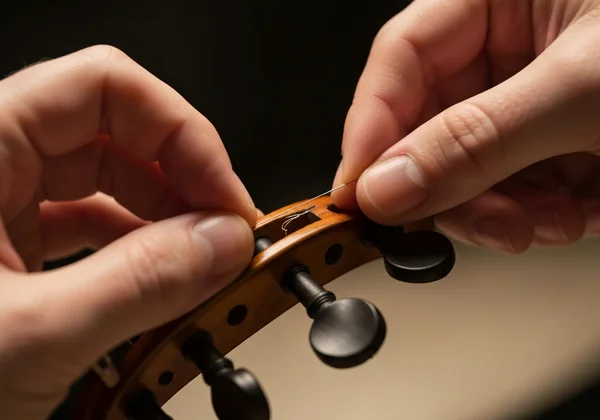
Thread into the Peg: Pull the string up over the bridge and nut and insert the tip into the small hole in the tuning peg. Pull it through so about half an inch (1 cm) sticks out the other side.
-
Wind the String: Begin turning the peg away from you to tighten the string. Guide the string with your other hand so it winds neatly next to itself, moving toward the side of the pegbox, not into the middle. A neat coil helps prevent slippage.
Initial Tuning & Stretching for Stable Pitch (Using Online Tuner)
Bring new strings up to pitch slowly. They'll need stretching. Don't rush, or they might snap.
- Begin Tuning: As you tighten the string, pluck it gently. When it starts to make a clear musical tone, it's time to use a tuner. Open up a reliable violin tuning tool on your computer or phone.
- Tune to Pitch: Continue turning the peg slowly while watching the tuner. Stop when you are close to the correct note (G). Use the fine tuner for the final, precise adjustment.
- Gently Stretch: Place your thumb on the fingerboard and gently pull up on the middle of the string a few times. This helps it stretch out. You will notice the pitch has dropped significantly.
- Re-Tune: Use your tuner to bring the string back up to pitch. You will need to repeat this stretch-and-retune process several times.
- Repeat for All Strings: Now, repeat these steps for the D, A, and E strings, one by one.
Common Mistakes When You Change Violin Strings at Home
Even with a guide, a few common issues can pop up. Knowing what they are and how to prevent them will give you the confidence to complete the job successfully.
Preventing Peg Slippage and Bridge Collapse
The two biggest fears for anyone learning to change violin strings at home are pegs that won't stay put and a bridge that suddenly falls over.
- Bridge Collapse: This is entirely prevented by changing only one string at a time. The tension from the other three strings is enough to hold the bridge and the internal soundpost securely in place.
- Peg Slippage: If a peg keeps unwinding, make sure the string is wound neatly on the peg, with the final coil pressing against the side of the pegbox. This friction helps hold it in place. If it still slips, a small amount of peg compound can work wonders.
Why New Violin Strings Won't Stay in Tune (Initially)
It's completely normal for new strings to go out of tune very frequently for the first few days. They are still stretching and settling into their final tension. Don't get discouraged! This is a sign that you've done everything correctly.
The solution is simple: tune your violin every time you pick it up. After a few days of playing and re-tuning, the strings will become much more stable. Keep our free online tuner bookmarked for quick and easy tuning checks during this break-in period.
Post-Change Care: Wiping Down and Rosining
After your strings are on and tuned, a little care goes a long way. Always wipe down your new strings with a clean, dry cloth after playing to remove rosin dust and oils from your fingers. New strings are also "thirsty" for rosin. You may need to apply more rosin to your bow than usual for the first few sessions to get the new strings to "speak" clearly and produce a strong sound.
Empower Your Playing: Regular String Changes & Reliable Tuning
Great job—you nailed it! Now your violin sounds amazing and you're saving trips to the shop. Changing your own strings is a valuable skill that saves you time and money, and it connects you more deeply with your instrument. You’ll immediately notice a richer, more responsive sound that makes practicing more enjoyable.
Remember, fresh strings are only half the battle. Accurate tuning is what brings your music to life. Now that your violin is ready, the final and most important step is getting it perfectly in tune.
Head over to ViolinTuner.org to use our simple, accurate, and free online tuner. It’s the perfect partner for your newly strung instrument.
FAQ Section
What are the notes for tuning a violin (G, D, A, E)?
The four open strings of a violin are tuned in perfect fifths. From the lowest-pitched (thickest) string to the highest-pitched (thinnest) string, the notes are G3, D4, A4, and E5.
How to tune a violin with pegs after changing strings?
When bringing a new string up to pitch, you'll use the large tuning pegs in the pegbox. Turn the peg in small, slow increments. As you turn to tighten, gently push the peg inward toward the pegbox. This slight pressure helps it "stick" and hold its position. Once you are close to the note, switch to the fine tuners on the tailpiece for small, precise adjustments.
Why do my violin pegs keep slipping with new strings?
Pegs can slip for a few reasons. The most common is that the string wasn't wound tightly against the wall of the pegbox, which creates friction. Low humidity can also cause the wood of the pegs and pegbox to shrink, leading to a looser fit. If the problem persists, a drop of peg compound can help, or you can consult a luthier.
Is it hard to change violin strings yourself?
It isn't hard once you know the steps! It can feel intimidating the first time, but it’s a straightforward mechanical process. By following a guide, working slowly, and changing one string at a time, you can do it safely and effectively. With this guide and a good online tuning tool, you can tackle the job with confidence.