Online Violin Tuner Routine Before Every Practice Session
A violin can sound almost right and still make the first ten minutes of practice feel rough. One string pulls against another, the open A sounds slightly bright, and simple scale work starts with hesitation instead of focus.
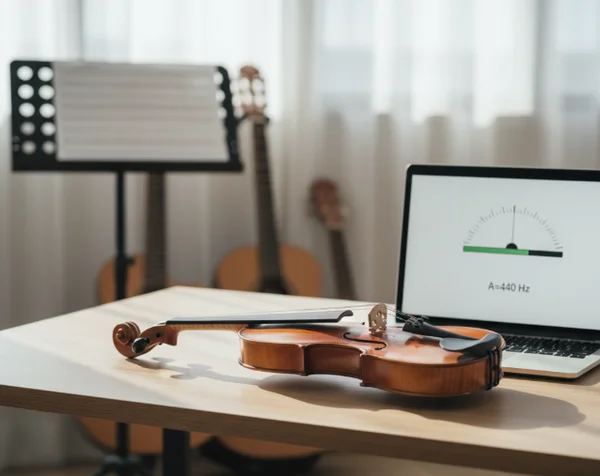
A short routine fixes that problem better than a long lecture. With a browser violin tuner, one calm pass through the strings is usually enough to set a reliable starting point before scales, etudes, or orchestra parts.
This article keeps the process practical. The goal is not perfect studio setup. The goal is to open the tuner, check the four strings in order, make small adjustments, and begin practice with less friction.
Why a short tuning routine protects the rest of practice
Practice goes better when tuning feels automatic. If the first note is unstable, the ear spends the next few minutes guessing whether the problem comes from the hand, the bow, or the instrument itself.
A repeatable routine removes that guesswork. It gives the player the same order, the same stopping points, and the same final recheck every day. That matters for beginners who are still learning string names, and it also helps returning players who want to get started without wasting time.
A good routine is brief on purpose. If tuning turns into a separate project, many players rush the middle, skip the last recheck, and begin practicing with one string still slightly off. A consistent two-pass habit is more useful than a complicated checklist that only happens once a week.
Set up the online violin tuner for a clean first reading
Open the online tuning page before touching any hardware. Put the case down, settle the violin, and give yourself one quiet minute. That pause helps more than people expect, especially after walking in from outdoors or pulling the instrument from a tightly packed case.
Then play open strings only. Do not test the tuner with stopped notes, double stops, or fast fragments from a piece. The first reading should tell you one simple thing: which string is nearest to the target pitch right now.
Start with a quiet moment and one clear bow stroke per string.
Use one steady bow stroke for each open string and let the note ring long enough for the tuner to settle. Short, nervous strokes create mixed readings and make players chase the display instead of listening.
In standard violin tuning, the four open strings are G3, D4, A4, and E5, as summarized in [Grinnell College's violin reference]. Keeping that order in mind prevents a common beginner problem: adjusting the right note with the wrong string in mind.
The A string also works as a simple center point because common concert pitch uses A4 at [440 Hz]. Even if the tuner shows the answer on screen, remembering that A is the middle anchor makes the rest of the set easier to organize.
If the room is busy, wait for a small pocket of quiet rather than forcing the first reading. One clean note is faster than three rushed corrections.
Tune G-D-A-E in a repeatable order
A repeatable order keeps the hand calm. Start on G, move to D, then A, then E. Going from the lowest string to the highest gives the routine a stable rhythm and makes it easier to remember where you are if you get interrupted.
Make small changes, then play the string again. Large turns create extra correction work. Small moves keep the sound closer to the target and help the ear stay involved instead of handing the entire job to the screen.
As you work across the set, keep the quick violin tuning tool open and visible. The article does not need a complicated setup because the site already reduces the job to the core action: hear one string, compare it, adjust, and move on.
Recheck each string after the first full pass
The first pass is only the first pass. After you reach E, return to G and run through the full set once more. Minor tension changes can nudge an earlier string enough to matter, especially when the violin started farther from pitch.
This recheck is the part many players skip, and it is usually the reason practice starts with a sour double stop or a scale that feels harder than it should. The second pass is short because most of the work is already done.
A useful rule is simple: if the second pass still needs large correction on more than one string, slow down and restart the routine instead of forcing a fast finish. That usually means the first pass was too rushed or the instrument needs a moment to settle.
Use fine tuners first and pegs only when the pitch gap is larger
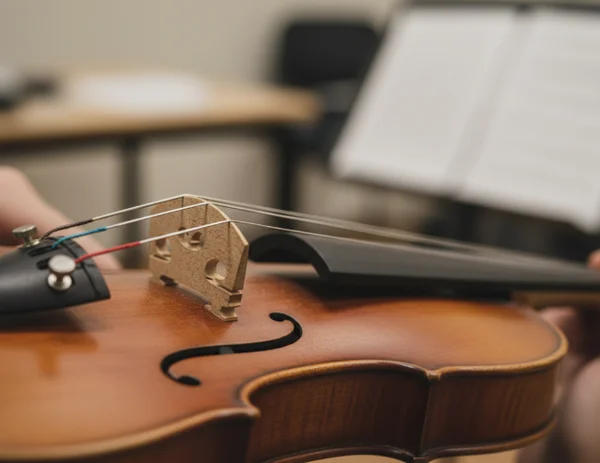
For small corrections, fine tuners are the safer first move. They let the player nudge the pitch without making the string jump past the target. That is usually all a daily pre-practice check needs.
Pegs are different. They control larger changes, but they also ask for more care. A university Suzuki guide warns students not to [over-tighten fine tuners or pegs] and to bring repair problems to a teacher or trained technician instead of forcing a fix.
That makes the decision easier in practice. If a string is only a little flat or sharp, start with the fine tuner. If the pitch is far away, the peg feels stiff, or the string keeps slipping back, stop treating it like a quick routine problem. Ask a teacher, parent, or shop for help before practice turns into hardware trouble.
Do a final stability check before the first exercise
Once all four strings look close, play them again in order with the same calm stroke you used at the start. This is the moment to notice whether the violin now feels settled or whether one string still drifts as soon as the bow pressure changes.
The point is not to chase microscopic movement. The point is to catch the kind of drift that will interrupt the first scale, first arpeggio, or first orchestra entrance.
Watch for quick pitch drift after the violin warms to the room
Violins react to the room around them. Dry air, damp air, and temperature swings can change how the wood and seams respond, and tuning pegs on small string instruments can slip when conditions are unstable. That is why an instrument that felt close in the case can feel different a minute later.
Treat that first minute of playing as part of the tuning process. If the pitch moves quickly after a few open strings, do one more short recheck before starting the real work. That extra pass is faster than correcting bad intonation throughout the next exercise.
This is also the moment to use judgment. If the violin came from a cold car or feels unusually resistant, pause. Let it settle instead of forcing repeated large corrections.
Key Takeaways: Keep the routine short when conditions change
A useful tuning habit should feel light enough to repeat every day. Open the tuner, check the strings in order, make small adjustments, recheck the set, and start playing. That is enough for most normal practice sessions.
If the room changes, the case has been moved around, or the violin suddenly feels less stable, go back to the browser tuning routine and run the same sequence again. The value of the site is not just the first tune-up. It is the ability to return to the same simple process whenever the instrument needs a clean reset.