Violin Tuner Guide: Using Ear Training for Perfect Pitch
The frustration of playing out of tune can discourage even the most dedicated violinists. You spend hours practicing a difficult passage, only to realize your intonation is slightly off. This struggle is common for beginners and intermediate players alike. While modern technology offers great support, true musical mastery comes from developing your internal pitch reference.
How can you ensure every note you play is perfectly in tune? The answer lies in systematic ear training. This process helps you bridge the gap between what you hear in your head and what comes out of your instrument. By training your brain to recognize correct pitches, you become a more confident and expressive musician.
While you work on these skills, using an online violin tuner provides the instant feedback necessary for early success. This guide will walk you through ear training exercises designed specifically for violinists. We will help you transform your tuning approach from a mechanical chore into a musical skill.
Understanding the Science of Pitch Perception for Violinists
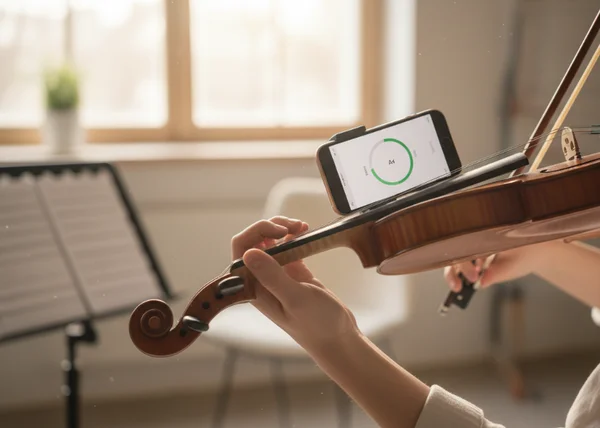
To improve your playing, it helps to understand how we actually hear music. For a violinist, pitch is not just a theoretical concept. It is a physical reality created by the vibration of strings. When you press a finger down on the fingerboard, you change the length of the string. This physical change alters the frequency of the sound.
How the Ear Processes Musical Pitch: A Violinist's Perspective
Our ears are incredibly sensitive instruments. They detect sound waves and translate them into electrical signals for the brain. For violinists, this process involves recognizing specific frequencies associated with the notes G, D, A, and E. When your strings are perfectly aligned with these frequencies, your violin resonates with a clear, ringing tone.
When you use a professional tuning tool, you are aligning your instrument to a standard reference, usually A440. As a violinist, your goal is to internalize this reference. Over time, your brain begins to recognize when a note "locks" into place. Professional players often tune by "feel" as much as by sound. They are reacting to the resonance within the wooden body of the violin.
Perfect Pitch vs. Relative Pitch: What Every Violinist Needs to Know
There is a common myth that you must be born with "perfect pitch" to be a great violinist. Perfect pitch, or absolute pitch, is the rare ability to identify a note without any reference. While helpful, it is not a requirement for musical excellence. In fact, most professional violinists rely on "relative pitch."
Relative pitch is the ability to identify the distance between two notes, known as an interval. This is a skill anyone can learn through practice. On the violin, relative pitch is vital because it allows you to play in tune relative to your open strings. If you can hear the distance between an open D and a third-finger G, you can achieve perfect intonation. Developing this skill starts with consistent reference points, like those found on our free online tool.
Building Your Foundation: Basic Ear Training Exercises for Violin
Before moving to complex pieces, you must build a solid foundation. Ear training should be a daily part of your practice routine, just like scales. The goal is to create a strong link between your physical movements and the sounds they produce.
Simple Interval Recognition for Violin Players
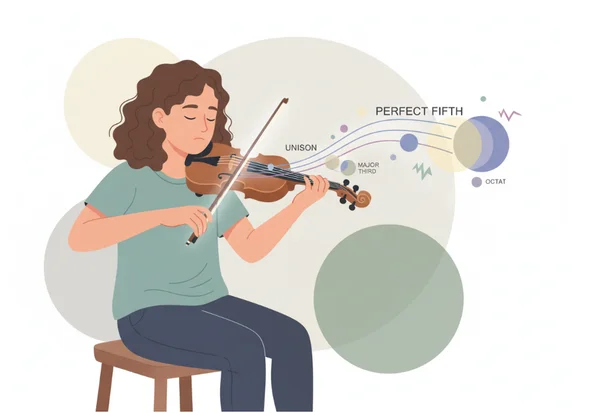
Intervals are the building blocks of all music. For a violinist, the most important intervals to master are the Perfect Fifth and the Unison. Since the violin is tuned in fifths, training your ear to hear this specific gap is essential.
- Unison Practice: Play an open string, then play the same note with your fourth finger on the string below. Use an online tuner to check if they match perfectly.
- The Perfect Fifth: Play two adjacent open strings together (like A and E). Listen for the "pure" sound. If it sounds "wavy" or dissonant, the strings are not in tune with each other.
- The Major Third: Practice the distance between an open string and your second finger. This interval gives music its "happy" or "bright" quality.
Spend just five minutes daily on these intervals. Over time, you'll notice your fingers finding the right positions on the fingerboard more naturally.
Tuning by Ear: The First Steps to Independence from Electronic Tuners
Many students become overly dependent on digital screens. While using an electronic aid is an excellent starting point, you should eventually try to "predict" the pitch.
This marks a major milestone in your musical journey. You're shifting from relying on technology to trusting your own musical instincts. Start by listening to the reference tone for the A string on your device. Try to hum the note before you pluck the string. Then, pluck the string and see how close you were.
Once the A string is set, try to tune the D string by playing it together with the A string. Listen for that "perfect fifth" resonance. If you get stuck, simply check your pitch to correct your path. This back-and-forth between your ear and a reliable tool builds deep musical memory.
Advanced Techniques for Developing Accurate Violin Intonation
As you progress, ear training becomes more about context. It is one thing to play a single note in tune, but it is another to maintain perfect intonation during a fast concerto. You must also keep your pitch steady while playing in a string quartet.
Harmonic Dictation Exercises for Violinists
Harmonic dictation involves listening to a series of chords or multiple notes played at once and identifying them. For violinists, this often means listening to the "hidden" harmonies in your music. Even when playing a solo melody, there is an implied harmony underneath.
Try this exercise: Play a simple scale, but stop on a random note. Try to hear the "home" note (the tonic) in your head. If you can always hear where the music is supposed to "rest," your intonation will remain stable. This helps even during difficult shifts. You can also use our tuning service to play drone tones. Practicing your scales against a constant drone tone is one of the fastest ways to develop professional-level intonation.
Practical Applications: Using Ear Training in Ensemble Playing and Performance
In an orchestra or chamber group, "in tune" is a moving target. You must tune not just to a machine, but to the people around you. If the wind section is slightly sharp, you must adjust your fingers instantly to match them. This requires "active listening."
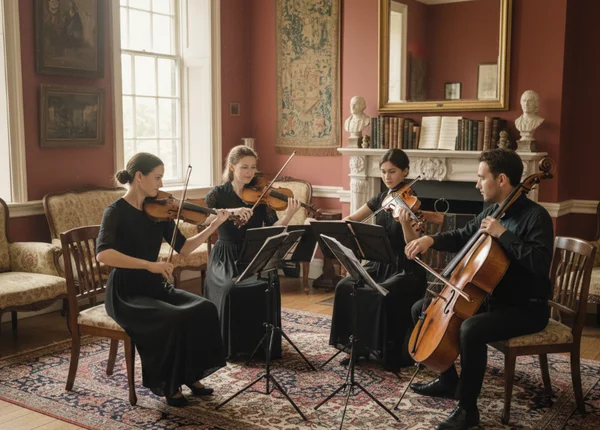
Advanced ear training teaches you to keep one ear on your own sound and one ear on the ensemble. During rehearsals, pay attention to the lower instruments, like the cello or bass. They provide the harmonic foundation. When you clearly hear the bass note, you can position your notes above it, building a solid musical foundation. This level of awareness is what separates students from performers.
Your Journey to Pitch Mastery: Next Steps in Violin Ear Training
Pitch accuracy is a skill you'll develop throughout your musical life. Even the world's finest violinists dedicate daily time to honing their ears. It is a combination of scientific understanding, physical muscle memory, and artistic sensitivity.
Be kind to yourself during this process. Developing your ear is a gradual journey, with progress often showing up in small but meaningful ways. Use technology as your coach, not your crutch. By combining a high-quality tuner with the exercises mentioned above, you provide your brain with the consistent data it needs to succeed.
Start your next practice session by spending two minutes simply listening. Tune your strings carefully, close your eyes, and internalize the sound of your violin. With a sharp ear and a well-tuned instrument, there is no limit to the music you can create.
FAQ Section
How long does it take to develop good relative pitch as a violinist?
Developing reliable relative pitch usually takes several months of consistent daily practice. Most students see significant improvement within 3 to 6 months if they practice interval recognition for at least 10 minutes a day. Using a free violin tuner to verify your progress can speed up this process by providing immediate corrections.
Can you really develop perfect pitch through practice?
While most experts believe that true "perfect pitch" must be developed in early childhood, adults can develop "learned pitch." This is also known as high-level relative pitch. This means you can memorize specific reference tones (like the A string) so well that it feels like perfect pitch. Consistent use of a tuning tool helps reinforce these specific frequencies in your memory.
What are the best daily exercises for improving violin intonation?
The most effective daily exercises include playing scales slowly against a drone tone and practicing "unison" notes with open strings. You should also try singing your music before you play it. Singing helps your brain "pre-hear" the pitch. Before you start these exercises, always ensure your instrument is properly tuned so your ears are learning the correct frequencies.
How does ear training complement using an electronic violin tuner?
Ear training and electronic tuners work together as a team. The tuner provides an objective, scientific standard that never changes. Ear training allows you to apply that standard to your playing in real-time. By using a professional online tuner, you calibrate your ear. Once calibrated, your ear can take over during the performance where you cannot use a screen.