Violin Tuning Problems: 15 Expert Fixes for Perfect Pitch
You carefully pluck the A string, adjust the peg, and get it just right. Then you move to the D string, and suddenly, the A string is flat again. Does this sound familiar? Why does your violin keep going out of tune? This common frustration can derail your practice sessions and undermine your confidence, whether you're a beginner or an experienced player.
Many violinists face challenges with slipping pegs, buzzing noises, and strings that just won't stay put. These issues aren't just annoying; they prevent you from producing the beautiful sound you work so hard to create. But don't worry—most tuning problems have straightforward solutions.
This guide will walk you through 15 expert fixes for the most common violin tuning problems. We'll cover everything from quick adjustments to long-term solutions. To make the process even easier, having an accurate reference is key. A reliable online tuner provides instant feedback, helping you pinpoint and solve these issues faster. Before we dive in, you can bookmark our free online tuner to use as we go.
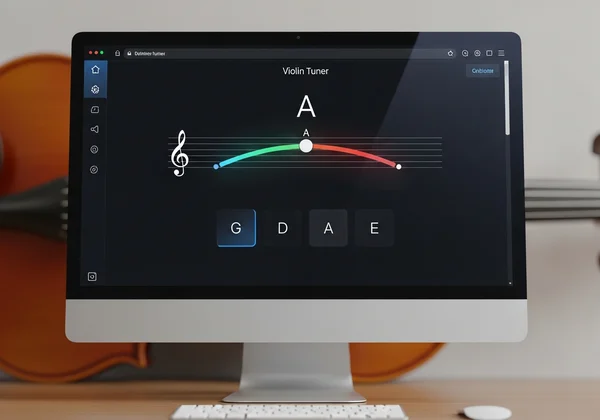
Common Violin Tuning Problems and Quick Solutions
When your violin won't cooperate, a few common culprits are usually to blame. Addressing these issues directly can often restore your instrument's stability quickly. Let's look at the most frequent problems and how to solve them.
Why Do My Violin Pegs Slip After Tuning?
Slipping pegs are one of the most maddening tuning issues, especially for beginners. You turn the peg to the correct pitch, let go, and it immediately unravels. This usually happens for two reasons: improperly wound strings or a poor fit between the peg and the pegbox.
Quick Fixes:
- Check Your String Winding: Ensure the string is wound neatly across the peg, with the final wind pressing against the side of the pegbox. This creates friction that holds the peg in place.
- Push and Turn: When tuning with pegs, apply gentle but firm inward pressure as you turn. This "seats" the peg into the pegbox, helping it stick.
- Use Peg Compound: If pegs continue to slip, a product called "peg compound" or "peg drops" can add the right amount of friction. If they are too tight, a bit of graphite from a pencil can help them turn more smoothly.
How to Fix a Violin String That Won't Stay in Tune
If a single string consistently goes flat or sharp, the problem might not be the peg. The issue could be with the string itself, the fine tuner, or where the string makes contact with the instrument.
Quick Fixes:
- Stretch New Strings: Brand new strings need a settling-in period. After installing them, tune them slightly sharp and gently pull up on the middle of the string. Retune and repeat a few times. This helps them stabilize faster.
- Check the Fine Tuner: Make sure your fine tuner isn't screwed all the way in or out. If it's at its limit, it can't make effective adjustments. Reset it to the middle of its range and retune using the peg.
- Lubricate the Nut and Bridge: The small grooves on the nut (by the scroll) and the bridge can sometimes "pinch" the string. A tiny amount of graphite from a pencil lead applied to these grooves will help the string glide smoothly.
Troubleshooting Buzzing Noises When Playing in Tune
You finally get your violin perfectly in tune, but now you hear an annoying buzz when you play certain notes. This is a common issue that can have several causes, often unrelated to the pegs themselves.
Quick Fixes:
- Check for Open Seams: Gently tap around the edges of your violin. A loose seam between the top and side plates can vibrate and cause a buzz. This requires a luthier to repair.
- Inspect Fine Tuners: A loose fine tuner or a string end touching the violin's top can vibrate. Make sure all fine tuners are snug and trim any excess string length.
- Look at the Chinrest: Sometimes, a chinrest can loosen over time and vibrate against the tailpiece or the body of the violin. Check if it's securely fastened.
Mastering Peg Tuning: Techniques and Mistakes to Avoid
Using the tuning pegs correctly is a fundamental skill. It requires a delicate touch and an understanding of how the instrument works. Many tuning problems stem from improper peg technique.
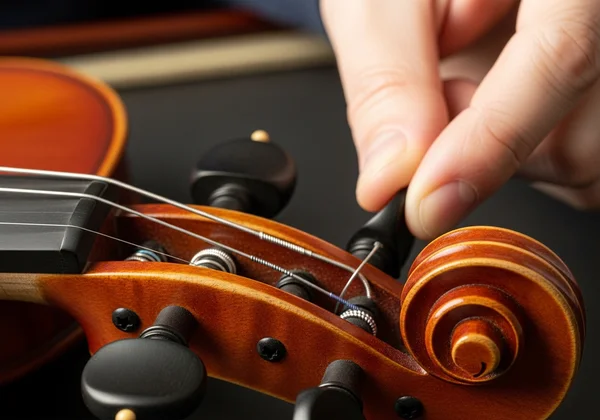
The Proper Way to Tune Violin Pegs (Step-by-Step)
Tuning with pegs can feel clumsy at first, but with the right method, it becomes second nature. Always use a reliable tuner for reference to ensure you don't overtune.
- Pluck the String: Gently pluck the string you want to tune so you can hear its current pitch.
- Turn the Peg: If the note is flat, turn the peg away from you while applying gentle inward pressure. If it's sharp, carefully turn it toward you. Make very small adjustments.
- Push to Set: Once you reach the correct pitch, give the peg a firm inward push to lock it in place.
- Verify with a Tuner: Always check the pitch with an accurate tool. For instant, precise feedback, use a browser-based tool like our violin pitch tuner. It will tell you immediately if you are sharp, flat, or perfectly in tune.
When to Use Fine Tuners vs. Pegs: A Player's Guide
Understanding when to use pegs versus fine tuners is crucial for efficient and safe tuning.
- Use Pegs for Large Adjustments: When a string is significantly out of tune (more than a half-step), always use the peg. This is common when you first take the violin out of its case or when changing strings.
- Use Fine Tuners for Small Adjustments: Fine tuners are designed for making tiny changes to the pitch. Once you get close to the correct note with the peg, use the fine tuner to dial it in perfectly. This is ideal for daily touch-ups.
Beginner violins often have fine tuners on all four strings, while professional instruments may only have one on the E string. This is because the steel E string is under high tension and difficult to adjust precisely with a peg alone.
Seasonal Tuning Tips: How Climate Affects Your Violin
Your violin is made of wood, which expands and contracts with changes in temperature and humidity. This is a primary reason why your instrument's tuning stability can change with the seasons.
- In High Humidity (Summer): Wood swells. This can cause pegs to stick and become difficult to turn. If this happens, do not force them. It's best to take your violin to a luthier who can carefully adjust them.
- In Low Humidity (Winter): Wood shrinks. This is the most common cause of slipping pegs. The peg shrinks more than the pegbox, causing it to lose its grip. Using a humidifier in your case or room can help prevent this.
Advanced String Resonance Issues and Solutions
Sometimes, tuning problems are more complex than just a slipping peg. Issues like wolf tones or uneven string volume can be frustrating. These often require a deeper understanding of how your violin produces sound.
Understanding and Eliminating Wolf Tones on Your Violin
A "wolf tone" is a jarring stutter or wobble that can occur on a specific note, most commonly on the G or C string of a cello, but also on violins. It happens when the frequency of the played note matches a natural resonant frequency of the instrument's body, creating an unstable vibration.
Solutions:
- Wolf Tone Eliminator: This is a small metal tube with a rubber sleeve that attaches to the string between the bridge and the tailpiece. By adjusting its position, you can dampen the unwanted vibration.
- Change String Type: Sometimes, a different brand or gauge of string can shift the instrument's resonance enough to move or eliminate the wolf tone.
- Luthier Adjustment: For persistent wolf tones, a skilled luthier may need to make internal adjustments to the soundpost or bass bar.
Why Is My A String Quieter After Tuning? Troubleshooting Guide
You've tuned your violin perfectly, but now one string—often the A string—sounds noticeably quieter or less vibrant than the others.
Troubleshooting Steps:
- Check Bridge Position: Make sure your bridge is standing perfectly upright and centered between the f-hole notches. A leaning bridge can mute string vibration.
- Inspect the Soundpost: The soundpost (a small wooden dowel inside the violin) is the "soul" of the instrument. If it has shifted even slightly, it can dramatically affect tone and volume. Adjusting a soundpost should only be done by a professional luthier.
- Evaluate the String: An old or "dead" string will lose its resonance and volume. If the string is old, simply replacing it might solve the problem. Using our free online tool can help you confirm the pitch is right before you assess the tone.
How Do String Age and Type Affect Tuning Stability?
Not all strings are created equal. Their material, construction, and age play a huge role in both the sound of your violin and its ability to stay in tune.
- String Age: As strings get older, they lose elasticity and can become "false," meaning they no longer vibrate evenly and are impossible to tune perfectly. Regular players should change strings every 3-6 months.
- String Type: Gut strings are known for their warm, rich tone but are very sensitive to humidity and require frequent tuning. Synthetic-core strings (like Dominants) offer a stable, balanced alternative and are the most popular choice. Steel-core strings are very stable and bright but can sound harsh on some instruments.
Perfect Tuning Made Easy: Your Next Steps to Playing in Tune
Every violinist faces tuning challenges - it's just part of playing! Once you understand what causes those frustrating tuning issues, from slipping pegs to seasonal changes, you can tackle them with confidence. The secret? Be patient, methodical, and use the right tools for the job.
Here's what to keep in mind:
- Master the Basics: Learn to properly wind your strings and use the "push-and-turn" method for your pegs.
- Know Your Tools: Use pegs for big adjustments and fine tuners for small ones.
- Listen to Your Instrument: Buzzes, quiet strings, and wolf tones are signs that need attention.
The most important tool for solving any tuning problem is an accurate pitch reference. While these manual techniques are essential, you need immediate, clear feedback to know if your adjustments are working. This is where a reliable digital tuner becomes your best friend.
Ready to put these fixes into practice? Go to ViolinTuner.org now and use our professional, browser-based tuner. It requires no downloads and works instantly on your phone or computer. Get perfect pitch every time and focus on what truly matters: making beautiful music.

Frequently Asked Questions About Violin Tuning Problems
How often should I tune my violin?
You should check your violin's tuning every time you play. Even small changes in temperature or humidity can affect the pitch. A quick check with an online tuner before you start practicing ensures you are training your ear correctly and playing with the best possible sound.
How to tune a violin without a tuner by ear?
Tuning by ear is an advanced skill that requires a reliable reference pitch. Traditionally, players use a tuning fork or a piano to sound an A (440 Hz). Once the A string is in tune, you can tune the other strings by playing two strings together and listening for the perfect fifth interval. This method takes practice, so for accuracy, it's always best to use a tuner when you can.
Why does my violin go out of tune so quickly?
Several factors can cause this. The most common are: new strings that haven't stretched out yet, slipping pegs due to low humidity, or old strings that can no longer hold pitch. If the problem persists, make sure the grooves in the nut and bridge are smooth and consider having a luthier check your setup.
What are the correct notes for tuning a violin (G, D, A, E)?
The four strings of a violin are tuned in perfect fifths. From lowest to highest, the notes are:
- G3 (the G below middle C)
- D4
- A4 (the A above middle C, standardized at 440 Hz)
- E5
How do I know if my violin needs professional repair rather than just tuning?
If you've tried the quick fixes in this article and are still having major issues, it's time to see a luthier. Signs that you need professional help include pegs that are cracked or won't fit, buzzing noises you can't locate, or if you suspect your soundpost or bridge has moved. Never try to adjust the soundpost yourself, as it can damage your instrument.